
Article
Introduction
WhatsApp has become an essential communication platform for individuals, businesses and organisations. From sharing documents and coordinating teams to exchanging important updates, its convenience has made it a widely used communication channel.
However, convenience does not always guarantee security.
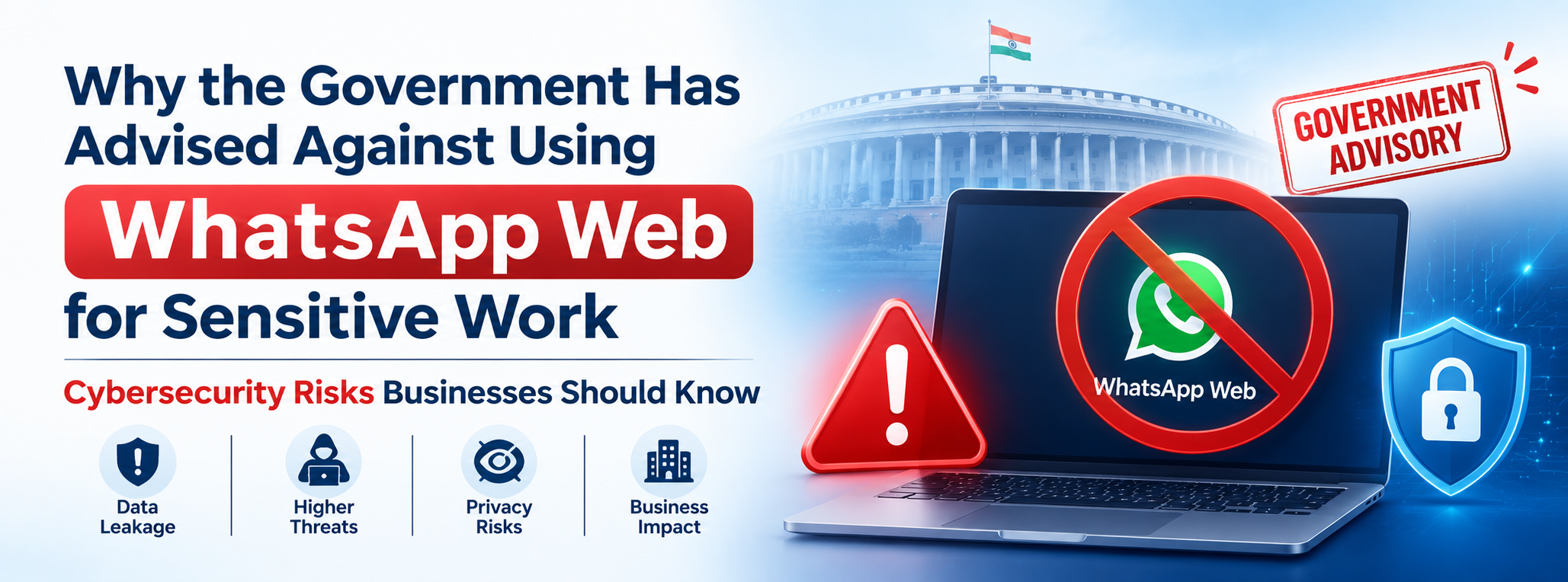
The Union Ministry of Home Affairs (MHA), through the National Cybercrime Threat Analytics Unit (NCTAU) under the Indian Cyber Crime Coordination Centre (I4C), has advised users against using WhatsApp Web to exchange sensitive government, organisational, financial and confidential information.
The advisory highlights potential cybersecurity risks associated with authenticated WhatsApp Web sessions, particularly when users access their accounts through shared, public or compromised computers.
For businesses that regularly exchange confidential information digitally, this warning raises an important question: How secure are your everyday communication practices?
1. Why Has the Government Issued This Advisory?
WhatsApp Web allows users to access their WhatsApp accounts through an internet browser on a computer by linking the account to their primary mobile device.
While this functionality improves productivity, it can also introduce additional security risks.
Once authenticated, a WhatsApp Web session may remain active even when the smartphone is disconnected from the internet. If a user forgets to log out after accessing the platform on a shared or unfamiliar computer, another person with access to that device could potentially view private conversations or send messages using the account.
Similarly, a computer infected with malicious software could expose information accessible through the browser.
These risks can become particularly serious when employees use WhatsApp Web to exchange confidential business documents, financial information or internal communications.
2. Five Major Cybersecurity Risks Associated with WhatsApp Web
Understanding the potential threats is essential for organisations that rely on digital communication.
A. Unauthorised Access to Private Messages
If a WhatsApp Web session remains active on an unattended or shared computer, another individual may gain access to private conversations.
This could expose sensitive business discussions, customer information, internal communications and confidential documents.
B. Exposure of Group Conversations
Business communication frequently takes place through WhatsApp groups involving employees, management teams, vendors and external partners.
Unauthorised access to an active session could expose group conversations, shared files and internal business information.
C. Account Impersonation
Cybercriminals who gain access to an authenticated session may impersonate the legitimate account holder.
They could send messages to colleagues, customers or business partners while appearing to be a trusted contact.
Such impersonation can damage business relationships and create opportunities for social engineering attacks.
D. Financial Fraud
Account impersonation can be exploited to request urgent payments, share fraudulent banking details or manipulate employees into transferring money.
For example, an attacker could impersonate a senior executive and send an urgent payment request to the finance department.
Without proper verification procedures, employees may unknowingly approve fraudulent transactions.
E. Phishing and Other Cyberattacks
Compromised accounts can become channels for distributing malicious links, fraudulent documents and phishing messages.
Because these messages appear to originate from familiar contacts, recipients may be more likely to trust them.
This makes account compromise particularly dangerous in business environments.
3. Does This Mean WhatsApp's End-to-End Encryption Is Compromised?
Not necessarily.
An important distinction highlighted in the advisory is that the concerns do not automatically indicate a weakness in WhatsApp's end-to-end encryption.
End-to-end encryption protects messages from being intercepted and read during transmission.
However, encryption cannot prevent an unauthorised individual from accessing messages that have already been decrypted and displayed on a compromised or unattended device.
In simple terms, even strong encryption cannot protect information if someone gains access to an authenticated session or the device itself.
This demonstrates why cybersecurity must extend beyond encryption to include endpoint security, access management and user awareness.
4. What Has the Government Recommended?
To reduce the possibility of account compromise, the government has recommended several precautions.
Businesses and individual users should consider the following security practices:
1. Log Out After Every Session
Always manually log out of WhatsApp Web after completing a session. Simply closing the browser window or tab may not terminate the authenticated session.
2. Avoid Public and Unfamiliar Computers
Do not access WhatsApp Web through computers at cybercafes, hotels, public kiosks or other shared locations when handling sensitive information.
3. Use Trusted Devices
If temporary access is unavoidable, use a trusted computer and private or incognito browsing mode, followed by manually logging out.
Remember that private browsing does not protect against malware already installed on the computer.
4. Review Linked Devices Regularly
Periodically check the list of linked devices through the WhatsApp mobile application and disconnect any unfamiliar or unrecognised devices.
5. Keep Systems Updated
Regularly update operating systems, browsers and security software to reduce exposure to known vulnerabilities.
6. Avoid Untrusted Downloads
Do not download suspicious attachments, software or files from unknown sources.
7. Monitor Unusual Account Activity
Pay attention to unexpected messages, suspicious login activity and unusual communication patterns.
5. What Should Businesses Do to Strengthen Communication Security?
The government advisory is a reminder that cybersecurity risks are not limited to sophisticated hacking attempts. Everyday employee practices can also expose organisations to significant threats.
Businesses should establish clear communication security policies and ensure employees understand how to handle sensitive information.
Here are some important measures organisations should consider:
Establish Communication Policies: Define which platforms employees can use for sharing confidential and business-critical information.
Implement Access Controls: Restrict access to sensitive information based on employee roles and responsibilities.
Strengthen Endpoint Security: Deploy appropriate endpoint protection and continuously monitor devices used for business communication.
Conduct Security Awareness Training: Educate employees about phishing, account impersonation, suspicious links and unsafe browsing practices.
Implement Incident Response Procedures: Establish a clear process for reporting compromised accounts, suspicious activities and potential data exposure.
Conduct Periodic Security Assessments: Identify weaknesses in systems, devices, access controls and organisational security practices.
These measures can help organisations reduce their exposure to cyber threats while strengthening their overall security posture.
6. Why Cybersecurity Awareness Is Critical for Every Organisation
Many organisations invest in firewalls, antivirus solutions and advanced security technologies but overlook the risks associated with everyday employee behaviour.
An unattended computer, an active browser session or a single suspicious link can create opportunities for cybercriminals.
Cybersecurity is not just about deploying technology. It also requires strong policies, continuous monitoring and employee awareness.
Organisations must ensure that their employees understand the importance of protecting business information across every communication channel.
A proactive cybersecurity approach helps businesses minimise risks, safeguard confidential information and maintain digital trust.
Conclusion: Convenience Should Never Compromise Security
The government's advisory against using WhatsApp Web for sensitive work highlights an important cybersecurity lesson: secure communication requires more than encrypted messaging.
Businesses must understand where their information is shared, who can access it and what security measures protect it.
As cyber threats continue to evolve, organisations should regularly review their communication practices, strengthen endpoint security and build a culture of cybersecurity awareness.
At Prime Infoserv, we help organisations strengthen their cybersecurity posture through proactive security assessments, managed security services, security awareness training, governance and risk management solutions.
Don't wait for an account compromise or data exposure to review your security practices.
Stay Secure. Stay Compliant. Stay Prepared.
Explore Prime Infoserv's Cybersecurity Solutions:
https://www.primeinfoserv.com/
Contact Us:
- Website: www.primeinfoserv.com
- Email: info@primeinfoserv.com
- Phone: +91 9147712576