
Article
A website can appear completely normal while the software behind it remains vulnerable. The PHP2Shell disclosures are a reminder that application security must extend beneath the login page, into the runtime, hosting stack and the systems connected to it.
On 21 October 2026, the PHP project issued security updates for two critical vulnerabilities in the PHP runtime. In affected conditions, an unauthenticated request may lead to remote code execution or exposure of process memory. Because PHP underpins numerous websites, portals and online services, the business implications go far beyond a software patch.
For CIOs, CISOs, IT teams and application owners, the immediate task is to identify every exposed PHP runtime, patch it, verify that the fix is active and examine whether suspicious activity occurred during the exposure window.
What Is the PHP2Shell Vulnerability?
PHP2Shell is the collective name used for CVE-2026-109618 and CVE-2026-109619. Both are flaws in core PHP request processing rather than bugs confined to a particular WordPress plugin, Laravel module or business application. Both have a CVSS v4.0 score of 9.2 (Critical). Under suitable conditions, exploitation can occur before application-level authentication controls run.
Vulnerability | Underlying issue | Potential impact |
CVE-2026-109618 | Out-of-memory corruption in request handling and cleanup | Memory corruption; remote code execution |
CVE-2026-109619 | Stale request-owned global state after memory has been freed | Use-after-free; memory exposure; remote code execution |
A vulnerability does not mean that every PHP website has been breached. Actual exploitability and impact depend on the deployed version, server configuration and runtime conditions. Nevertheless, the PHP project states that updating is the only complete mitigation.
How Does a PHP2Shell Remote Code Execution Attack Work?
In simplified terms, an attacker sends a specially crafted web request. PHP processes parts of that request before business application logic is invoked. A vulnerable memory-handling condition can leave internal request state corrupted or stale. An attacker able to exploit that condition may execute code with the privileges of the relevant PHP worker.
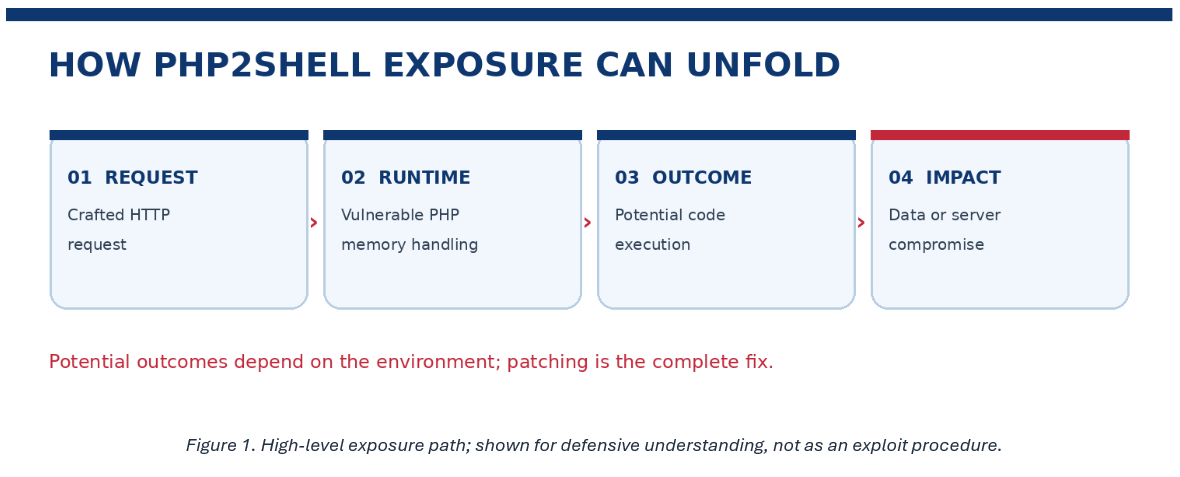
Figure 1. High-level exposure path; shown for defensive understanding, not as an exploit procedure.
A successful intrusion could expose configuration files, database credentials and application secrets. Depending on server privileges and connectivity, attackers may attempt persistence, malware delivery, data theft or movement into adjacent systems. These are possible consequences—not confirmed outcomes for a particular organisation.
Which PHP Versions Are Affected and How Do You Fix Them?
The PHP project published the following fixed upstream releases on 21 October 2026. Organisations should identify affected installations and move to a fixed release or validated vendor-supplied backport. End-of-life PHP branches require an upgrade or another explicitly supported remediation route.
PHP branch | First fixed upstream release |
8.2 | 8.2.35 |
8.3 | 8.3.36 |
8.4 | 8.4.27 |
8.5 | 8.5.12 |
Checking only the version displayed by a website or the result of “php -v” is not enough: the command-line binary may differ from the one serving web requests. Inventory PHP-FPM pools, Apache modules, containers, control panels, packaged applications and parallel installations. Validate the running service and its vendor patch status.
Are WordPress, Laravel and Other PHP Applications Vulnerable?
A PHP-based application may be exposed if it is served by an affected runtime. Updating its themes, plugins or application code alone will not repair a defect in the PHP engine. WordPress, Drupal, Joomla, Laravel and custom portals should therefore be evaluated in the context of their hosting stack—not assumed safe or unsafe solely because of the application brand.
What Are the Business Risks for Enterprises?
A vulnerable public-facing server may sit at the edge of systems that handle customer profiles, payments, confidential documents or sensitive operational data. The real business risk is determined by what the web service can read, where it can connect and which privileges it possesses.
Customer or employee information exposure, with potential contractual and privacy implications.
Service interruption, website defacement, phishing redirects or malicious content distribution.
Credential or API-token theft that may affect cloud services, databases or connected applications.
Incident-response cost, forensic investigation, service restoration and reputational harm.
Banks, insurers, hospitals, manufacturers, retailers and educational institutions should evaluate exposure based on their actual technology estate—not assume that PHP2Shell is relevant only to technology businesses.
How Can Teams Detect Potential PHP2Shell Exploitation?
Following emergency patching, teams should investigate the period in which vulnerable services were exposed. Review web and PHP error logs, process execution telemetry, file changes, authentication events and outbound network traffic. Preserve evidence if compromise is suspected.
Unusual POST or multipart requests and unexpected PHP worker crashes.
Web-server or PHP processes initiating shells or unexpected command-line tools.
New or modified PHP files in upload, cache, temporary or public directories.
Unexplained outbound connections, modified scheduled tasks or newly created privileged accounts.
Unexpected access to configuration files, credentials or application secrets.
Indicators are investigative leads, not automatic proof of exploitation. If credible compromise is suspected, isolate affected hosts appropriately, preserve evidence, scope the intrusion, rotate exposed secrets and recover from known-good artefacts.
How to Fix PHP2Shell: An Enterprise Remediation Plan
1. Identify all PHP deployments
Discover internet-facing servers, cloud instances, staging systems, containers and externally managed sites. Assign an accountable owner and record PHP branch, runtime mode, exposure and business criticality.
2. Patch the runtime and activate the fix
Install a fixed upstream version or validated vendor backport. Rebuild affected containers where needed. Restart PHP workers and relevant web services, then verify the active running version or package fix. Application dependency updates alone are insufficient.
3. Prioritise exposed, business-critical asset
Prioritise internet-facing portals and systems with access to sensitive data or trusted enterprise connections. Where emergency maintenance is unavoidable, document the risk and minimise exposure while remediation is performed.
4. Validate remediation and investigate earlier activity
Re-scan affected hosts, review configuration and assess relevant telemetry from the exposure window. Patching prevents exploitation of the fixed flaw but does not prove that an earlier compromise never occurred.
5. Reduce future blast radius
Run web services under least-privilege accounts, restrict unnecessary egress, segregate application tiers, protect secrets, retain security logs and monitor file integrity. A WAF can add defensive value but should never be represented as a complete PHP2Shell fix.
Why Traditional Website Testing May Miss Runtime Vulnerabilities
Website penetration tests and infrastructure assessments answer different questions. WAPT focuses on application logic, authentication, authorisation and unsafe input handling; infrastructure vulnerability assessment evaluates runtimes, operating systems and exposed services. External Attack Surface Management (EASM) addresses a third problem: discovering internet-facing assets that may fall outside the established inventory.
The lesson is not to replace WAPT with scanning or vice versa. It is to combine coverage so that teams do not assess the application while overlooking the engine that executes it.
Beyond Emergency Patching: Continuous Cyber Resilience
Critical disclosures turn into operational crises when asset ownership, vulnerability intelligence and monitoring operate independently. Effective programmes connect discovery to risk assessment, remediation, validation and security operations.
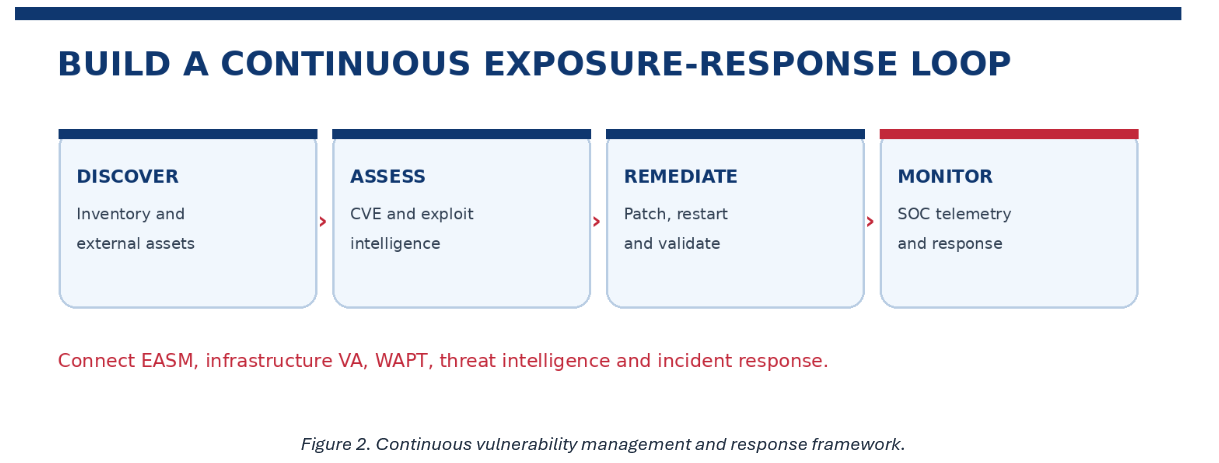
Threat intelligence helps teams understand what has changed; EASM makes the exposed estate visible; infrastructure VA and WAPT assess different weaknesses; managed SOC monitoring identifies suspicious activity; and incident-response readiness supports containment and recovery. Together, these capabilities can reduce the gap between disclosure and action.
PHP2Shell and Data Protection: What Indian Enterprises Should Consider
A software weakness is not automatically a reportable data breach. If an incident results in unauthorised access, disclosure or disruption, however, applicable CERT-In directions, sectoral requirements, contractual commitments and relevant data-protection obligations may need to be examined. Reporting duties depend on the facts and the law in force at the time; organisations should obtain appropriate legal and compliance advice.
Seven Questions Every CIO, CISO and IT Head Should Ask
Do we know every internet-facing service using PHP, including third-party hosted systems?
Have we identified every potentially affected runtime, worker and container?
Were appropriate fixes installed, activated and independently verified?
Did we investigate suspicious activity before remediation?
Does our security testing cover the application and its underlying infrastructure?
Can our monitoring detect unusual PHP process, file and network behaviour?
Who owns escalation, containment and recovery if a web server is compromised?
PHP2Shell Frequently Asked Questions
What is PHP2Shell?
It is the collective name for two critical PHP runtime vulnerabilities, CVE-2026-109618 and CVE-2026-109619, disclosed with fixes on 21 October 2026.
How severe are these PHP vulnerabilities?
Both are rated Critical with a CVSS v4.0 score of 9.2.
Can PHP2Shell affect WordPress websites?
Yes. A WordPress deployment may be exposed when its underlying PHP runtime is affected; updating WordPress alone is not a substitute for patching PHP.
What PHP versions include fixes?
The first fixed upstream releases are PHP 8.2.35, 8.3.36, 8.4.27 and 8.5.12. Verify vendor backports where applicable.
Can a WAF fully stop PHP2Shell?
No. A WAF can provide supplementary protection but is not a complete mitigation. Apply the appropriate runtime fix.
Does patching prove the server was not compromised?
No. When exposure existed, review logs and security telemetry for signs of exploitation before and after patching.
What should businesses do first?
Inventory exposed PHP services, apply appropriate patches, restart workers, verify the fix and review possible exploitation indicators.
Final Thoughts: The Website Is Only the Visible Part of the Risk
A website may appear secure while an unpatched runtime underneath it creates a pathway to sensitive systems. PHP2Shell demonstrates why vulnerability management must encompass the application, its runtime, hosting infrastructure and operational security controls.
If a critical vulnerability affecting your technology estate were disclosed today, how quickly could you identify every exposed system, verify remediation and establish that your organisation remains protected?
That answer is a more useful measure of cybersecurity readiness than a periodic checklist alone.
SECURITY READINESS CHECK | Structured assessments can connect external exposure discovery, infrastructure vulnerability analysis, web application testing, threat intelligence, SOC monitoring and incident-response preparedness.
DOWNLOAD PDF NOW