

Article
Cyber Risk Becomes Business Reality
CYBERNEXT
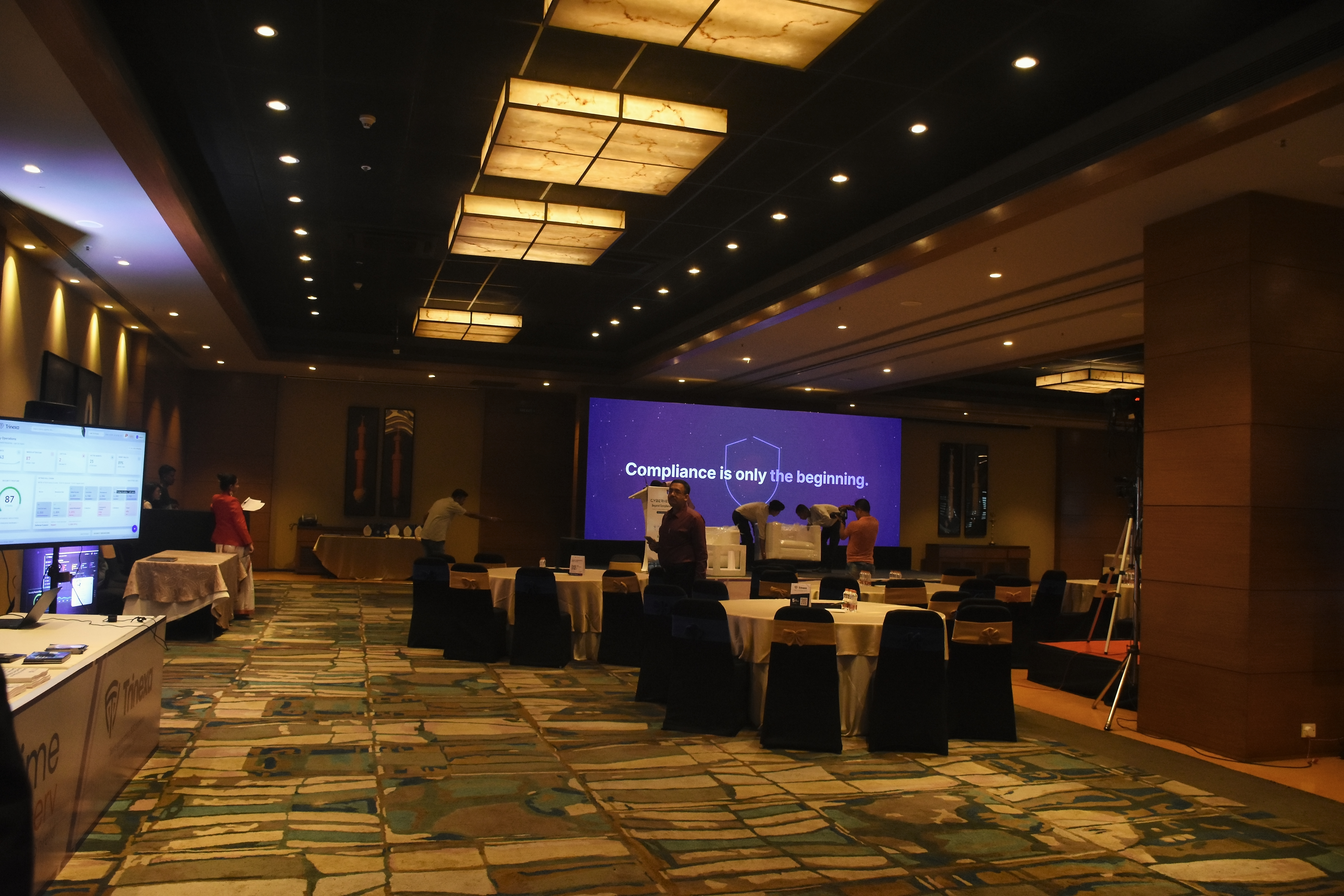
2026 brings Kolkata’s technology leadership community together for an evening
of insight, dialogue and shared responsibility
POST EVENT
REPORT 9 OCTOBER 2026 KOLKATA
75+
CIOs
CISOs CXOs and technology leaders
ONE EVENING
Keynotes
panel dialogue platform launch and networking
ONE PURPOSE
Stronger
cybersecurity privacy resilience and digital trust
Cyber Risk Becomes Business Reality
CYBERNEXT 2026 brings Kolkata’s technology leadership community together for an evening of insight, dialogue and shared responsibility
POST EVENT REPORT 9 OCTOBER 2026 KOLKATA
|
75+ CIOs CISOs CXOs and technology leaders |
ONE EVENING Keynotes panel dialogue platform launch and networking |
ONE PURPOSE Stronger cybersecurity privacy resilience and digital trust |
A full house for a conversation that matters
CYBERNEXT 2026 concluded in Kolkata on 9
October with an overwhelming response from the technology and business
leadership community. Presented by INT and Prime Infoserv Pvt. Ltd., in
association with the Philanthropic Technical Association, and supported by
InfoSec Foundation as Community Partner, the gathering marked Cybersecurity
Awareness Month through a focused leadership dialogue on cybersecurity,
privacy, resilience and digital trust.
The evening brought more than 75 CIOs,
CISOs, CXOs, technology leaders and decision makers into one room. The
discussion moved beyond audit evidence and policy statements to a harder
question: when a real incident affects data, essential services, production,
customers or reputation, can the organisation continue to operate and recover
with confidence?
The energy in the room reflected the
character of Kolkata’s festive season: warm, connected and deeply community
driven. Yet the substance remained urgent. AI adoption, India’s Digital
Personal Data Protection framework, third party dependence, ransomware and
connected operations are changing the nature of enterprise risk. CYBERNEXT
created a space where leaders could examine those changes together.
The inaugural session
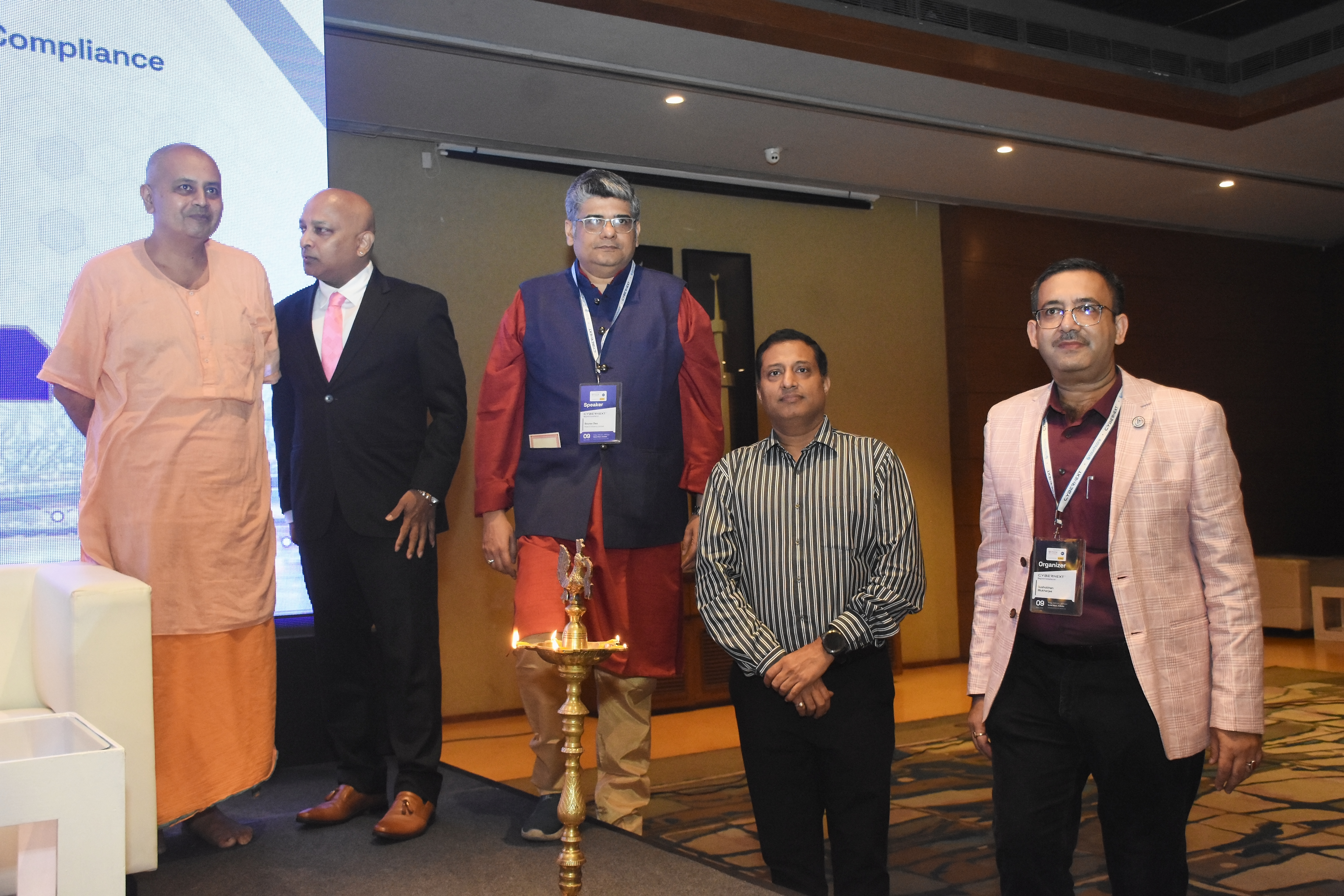
The programme opened with the ceremonial welcome
of the distinguished guests. Advocate (Dr.) Prashant Mali graced the occasion
as Chief Guest, while Swami Vedadhitananda joined as Special Guest of Honour.
Sushobhan Mukherjee felicitated Dr. Mali with the Uttariya, and Abhishek Rungta
felicitated Swami Vedadhitananda. Sourav Das and Raghunath Rungta presented the
bouquets. The dignitaries then joined the ceremonial lamp lighting, formally
inaugurating CYBERNEXT 2026. Their presence brought together legal insight,
technological responsibility and the human values that must guide the use of
digital systems.
Abhishek Rungta of INT welcomed the
gathering, followed by opening remarks from Sushobhan Mukherjee of Prime
Infoserv. The hosts placed the event in its broader context: cybersecurity
awareness must translate into decisions, tested capabilities and a culture of
accountability across the enterprise.
In his opening address, Sushobhan Mukherjee connected the purpose of CYBERNEXT with the spirit of the Puja season. The story of Durga represents collective strength: different powers coming together to confront a threat that no single force could overcome alone. Cyber resilience demands the same collaboration between leadership, technology, legal, privacy, operations, partners and the wider community. He reminded the audience that cybersecurity can no longer remain a periodic boardroom discussion. It must protect business continuity, people, trust and the organisation’s ability to respond when disruption becomes real.
Swami Vedadhitananda’s address added a deeply human dimension to the
inaugural session. In an age shaped by automation and constant digital change,
technology must remain guided by awareness, responsibility and sound judgment.
His presence helped connect the technical agenda of the evening with the values
that should govern leadership and innovation.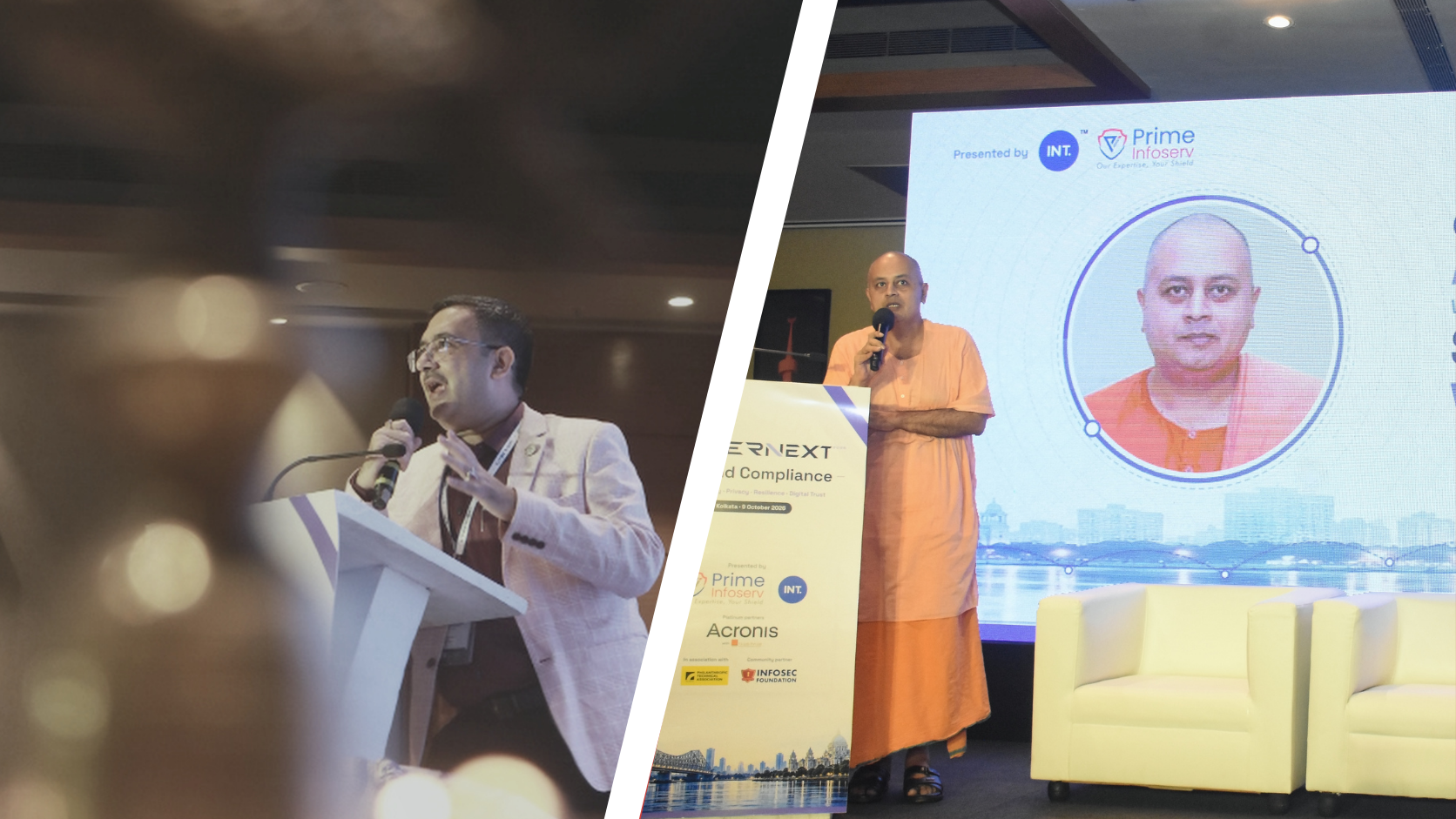
Keynote insight AI adoption in the age of DPDPA
Advocate (Dr.) Prashant Mali’s keynote, ‘AI Adoption in the Age of DPDPA’, combined rigorous legal analysis with distinctly Bengali metaphors that made a complex subject memorable. His opening warning captured the challenge facing most organisations: ‘Your organisation adopted AI before your policy did.’
Drawing on IBM’s 2026 India findings cited in his presentation, Dr. Mali noted an average breach cost of Rs 25.5 crore in India, with shadow AI adding Rs 1.79 crore to a breach. He contrasted the cost of a breach without security AI and automation, Rs 31.6 crore, with Rs 21.3 crore where organisations used them extensively. His message did not argue against AI adoption. It called for governed adoption backed by clear ownership and security engineering.
Five points where DPDPA meets AI
Using the metaphor of ilish, valued but full of bones, Dr. Mali explained five points where organisations must handle AI carefully under the Digital Personal Data Protection Act:
· Training data: the meaning of publicly available data remains narrow, making indiscriminate scraping risky.
· Prompts and retrieval augmented generation: a new purpose may require a new notice, consent or another lawful basis.
· AI supported decisions about people: Section 8(3) creates a duty to ensure that personal data remains complete, accurate and consistent.
· Model memory and erasure: organisations must design for deletion because model weights do not forget easily.
· Vendors and APIs: contracts may transfer work to a processor, but accountability remains with the Data Fiduciary.
He also highlighted the need to manage
three regulatory clocks during an AI related incident: CERT-In reporting, DPDPA
breach intimation and intermediary takedown obligations where applicable. The
operational lesson was clear. Legal, security, privacy, communications and
business teams must rehearse their decisions before a crisis.
The Dashabhuja agenda for leaders
The keynote concluded with a ten arm leadership agenda inspired by Dashabhuja. For boards and CEOs, it called for a named AI owner, a complete AI inventory including shadow AI, a DPIA before deployment, a lawful basis for each use case and stronger vendor contracts. For CISOs, it recommended sanctioned AI tools, application of Rule 6 safeguards to prompts and logs, model red teaming, human oversight for decisions about people and rehearsal of the relevant reporting timelines.
Dr. Mali’s final thought captured the balance CYBERNEXT sought to
establish: AI can be bought, but judgment has to be grown.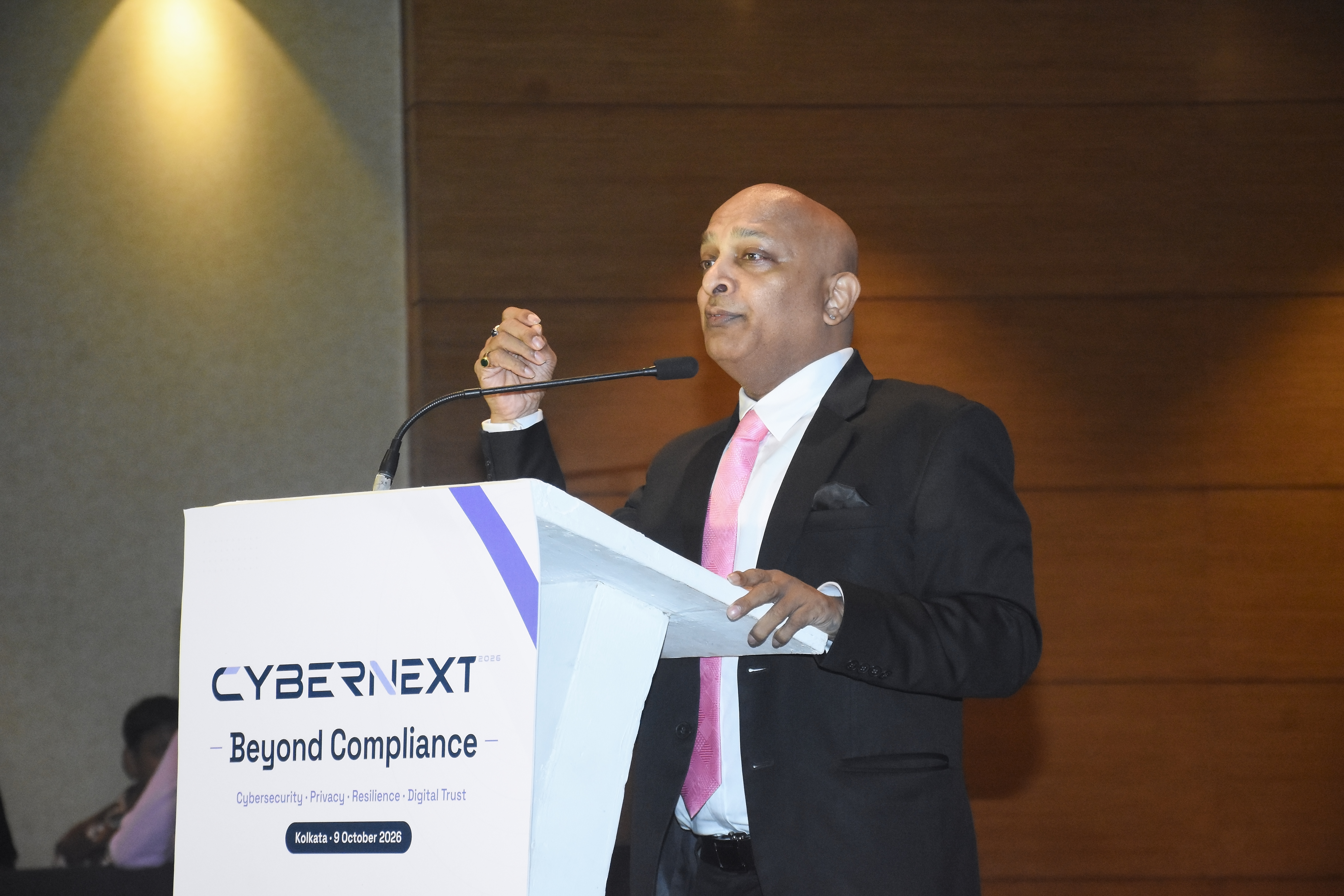
From data protection to operational resilience
Rajesh Chhabra, General Manager for APAC
Large Markets at Acronis, connected the DPDP Act with practical cyber
protection. His session examined how integrated data protection, backup,
recovery and security capabilities can support compliance while strengthening
resilience. The discussion reinforced a central event theme: organisations need
evidence that they can protect and restore critical data, not only proof that
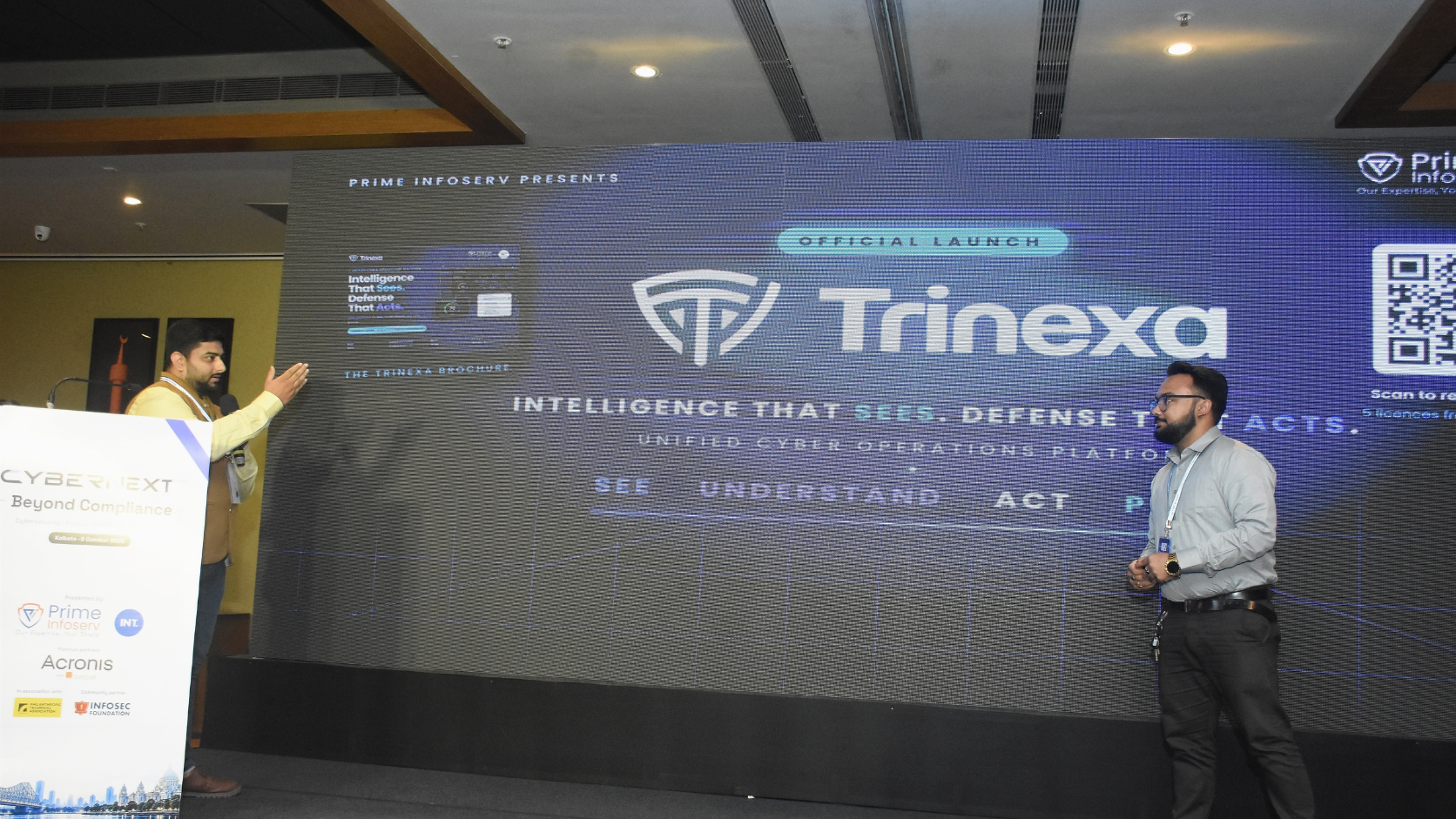
policies exist.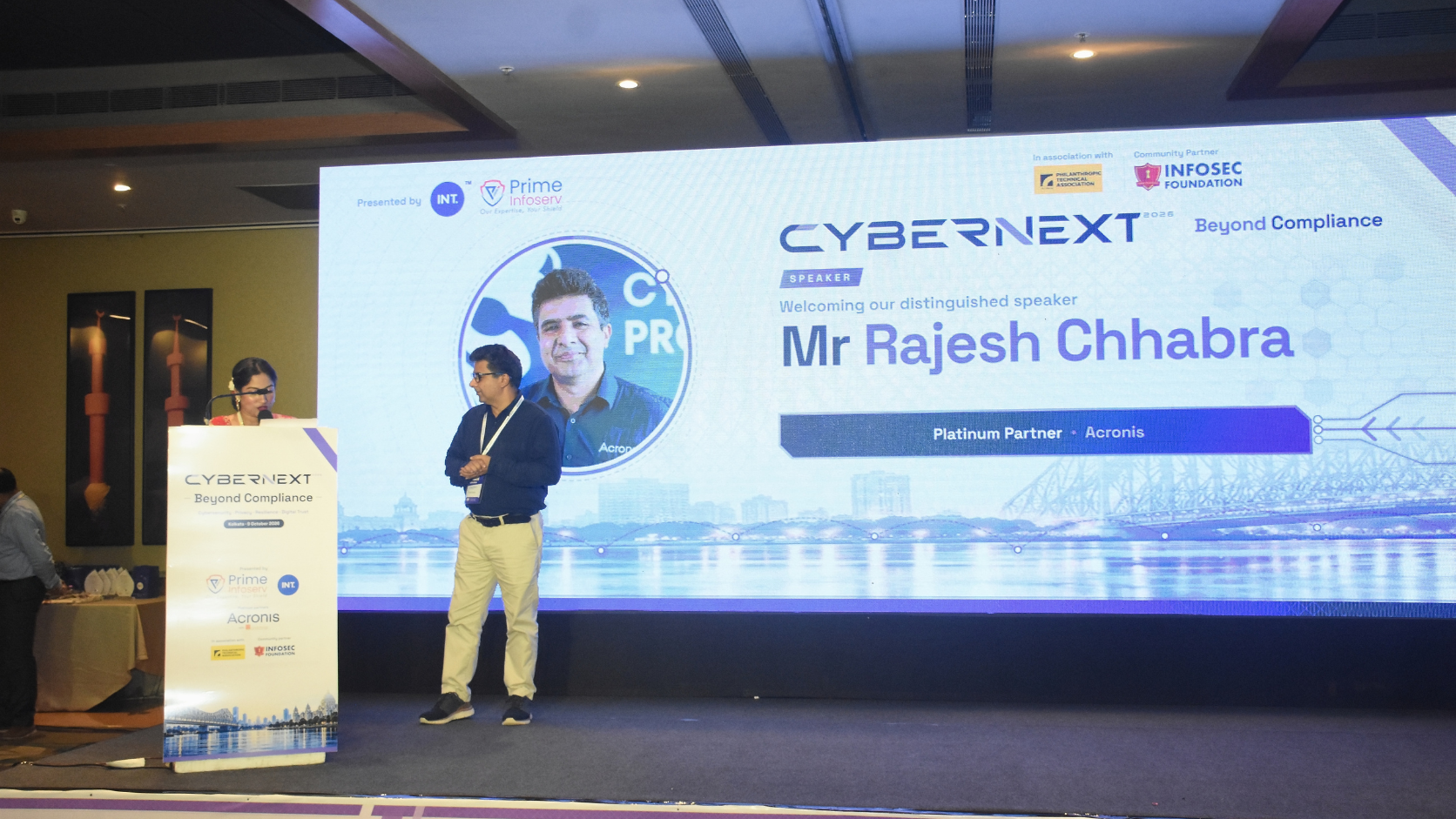 Prime Infoserv also formally introduced the
Trinexa platform, with Raja Kabiraj and Akash Roy leading the launch. The
demonstration area gave participants an opportunity to understand the platform
and interact directly with the team. A DPDP self assessment environment,
supported through the DPFLO partner ecosystem, further helped participants
connect regulatory readiness with practical implementation.
Prime Infoserv also formally introduced the
Trinexa platform, with Raja Kabiraj and Akash Roy leading the launch. The
demonstration area gave participants an opportunity to understand the platform
and interact directly with the team. A DPDP self assessment environment,
supported through the DPFLO partner ecosystem, further helped participants
connect regulatory readiness with practical implementation.
Leadership panel When Cyber Risk Becomes Business Reality
The leadership panel, moderated by Sourav Das, Chairman of PTA and Group Chief of Digital and IT at Rupa & Company Limited, examined how organisations can move from boardroom discussion to operational resilience.
The panel brought together Ranjit Kishore, CISO at Alyssum Global Services; Syed Kadam Murshed, CIO at DESUN Hospitals; P. C. Nayak, Deputy General Manager and Data Protection Officer at National Insurance Company Limited; and Rajib Roy Chowdhury, Group Head IT at Avadh Sugar & Energy Limited, part of Birla Sugar.
Ranjit Kishore addressed a question at the centre of India’s privacy journey: should organisations treat DPDP as a compliance burden or use it as a catalyst for cyber resilience? The discussion connected data discovery, minimisation, access governance, retention and breach preparedness with measurable improvements in security.
Syed Kadam Murshed brought the healthcare perspective, where a technology outage can quickly affect continuity of patient care. His contribution placed clinical systems, sensitive health information, ransomware preparedness, third party dependencies and tested downtime procedures within one resilience agenda.
P. C. Nayak examined the responsibility carried by the insurance sector as a custodian of identity, financial, policy and claims data. His perspective connected privacy governance with customer trust, service continuity, AI enabled fraud, regulatory preparedness and oversight of the wider partner ecosystem.
Rajib Roy Chowdhury explained how cyber risk enters the physical world through manufacturing and IT and OT convergence. The discussion covered plant availability, legacy systems, secure vendor access, SAP, supply chain dependencies and the need to test recovery without disrupting production.
Participation that kept the evening alive
The event deliberately combined serious
discussion with active audience participation. Abhishek Kar of mjunction
conducted engaging quiz rounds throughout the programme, with tokens of
appreciation for participants. The ethnic dress recognition added a festive
note and reflected the celebration surrounding the gathering.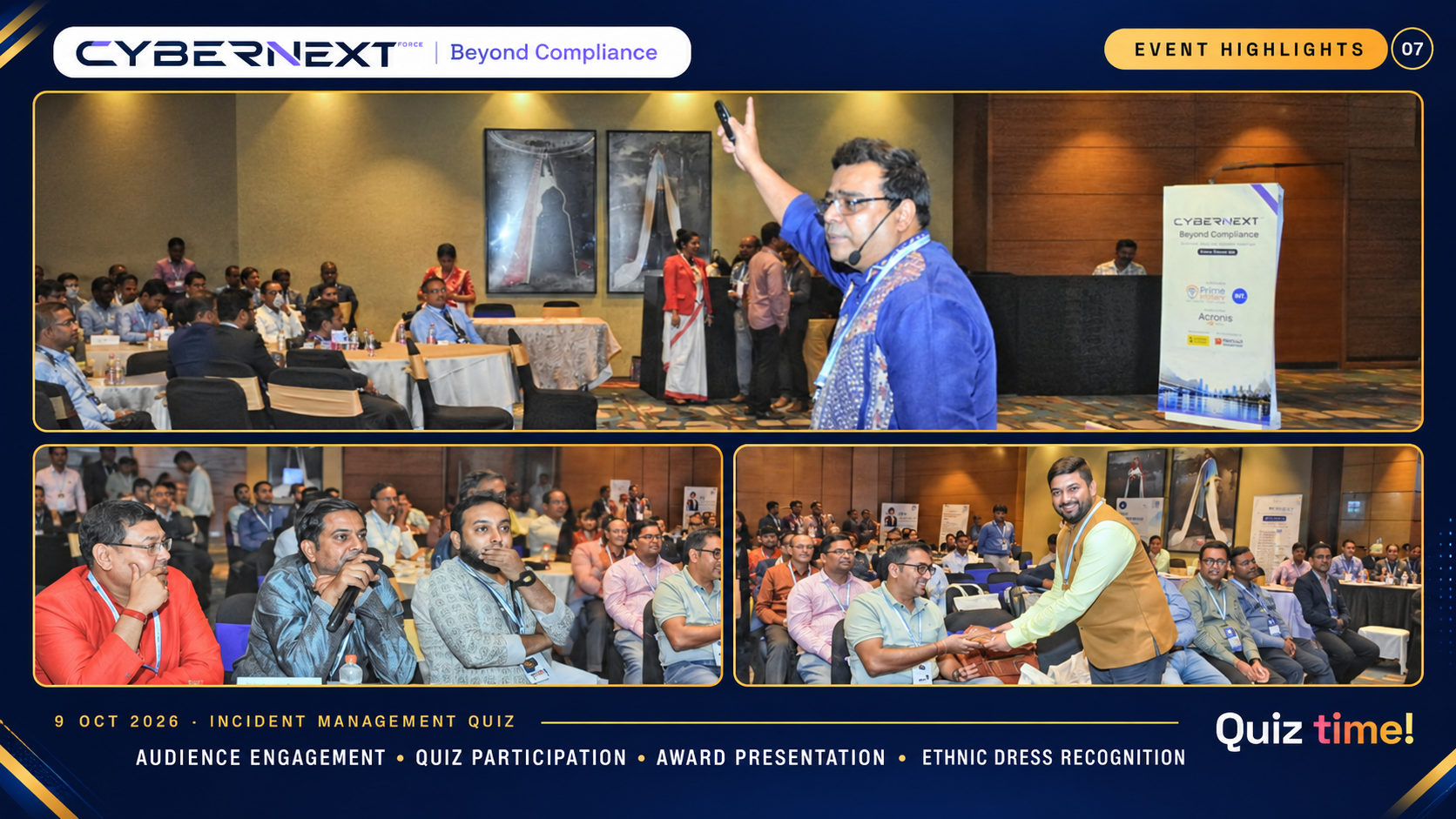
The conversations continued beyond the stage through demonstrations, partner interactions, networking and dinner. This exchange between speakers, enterprise leaders, partners and practitioners gave CYBERNEXT its real value. The community did not gather only to listen. It came together to question assumptions, share experience and build relationships that can strengthen the region’s cybersecurity ecosystem.
The concluding segment recognised the organisations and individuals
whose support made the gathering possible. Raja Kabiraj led the partner
felicitation as supporting organisations received tokens of appreciation on
stage. Delegates also collected their event gifts after the programme. These
moments of recognition reinforced a defining feature of CYBERNEXT: the event
belonged to the whole community that helped create it.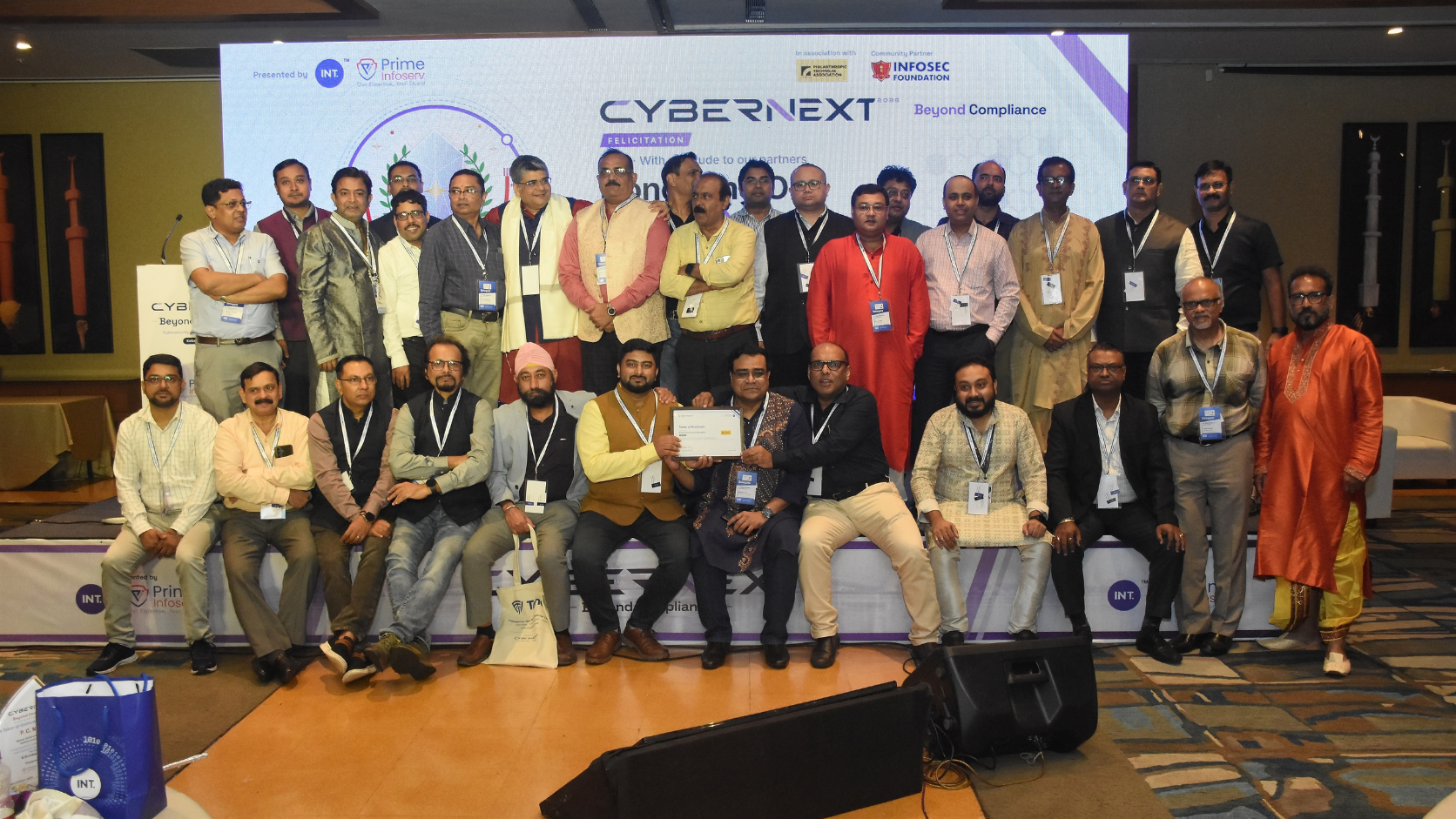
With gratitude
We extend our sincere gratitude to Advocate
(Dr.) Prashant Mali and Swami Vedadhitananda for gracing the occasion and
setting a thoughtful direction for the evening. We thank Rajesh Chhabra for his
industry perspective and Sourav Das for guiding the panel with clarity and
purpose.
Our appreciation goes to Ranjit Kishore,
Syed Kadam Murshed, P. C. Nayak and Rajib Roy Chowdhury for sharing candid,
sector specific insights. We also thank Abhishek Kar for keeping the audience
engaged, and Raja Kabiraj and Akash Roy for leading the Trinexa launch and
demonstrations.
We thank Abhishek Rungta, Raghunath Rungta and the entire INT team; Sourav Das and the PTA leadership and members; the InfoSec Foundation community; every sponsor, partner, speaker, delegate, volunteer, emcee, registration and logistics team member; and the Hotel Altair team for helping us deliver the programme.
Most importantly, we thank every CIO, CISO,
CXO and technology leader who joined us. Your response made the event fully
subscribed and filled the room with the quality of dialogue that CYBERNEXT was
created to enable. Your presence, questions and encouragement turned an event
into a community experience.
The work continues
Cybersecurity Awareness Month reminds us
that awareness has value only when it changes behaviour and strengthens
preparedness. The practical challenge after CYBERNEXT is to test one assumption
that currently exists only on paper: map a critical data flow, assess an AI use
case, examine a high risk vendor, rehearse an incident decision or restore an
essential service.
CYBERNEXT 2026 may have concluded, but the dialogue continues. Prime Infoserv, INT, PTA and InfoSec Foundation remain committed to helping organisations move beyond compliance and build cybersecurity, privacy and resilience that work in business reality.
Thank you for making CYBERNEXT 2026 a memorable celebration of cybersecurity awareness and collective responsibility.
- Cybernext